top of page
SPEED CAT EVO


Brand
Duration
Catogory
Puma
3 weeks
Motorsports
Story Development
Bio-mechanics
Concept Innovation
Photoshop
Gravity sketch
Blender
Adobe Substance
Illustrator
Images on this page are for demonstration purposes only in a non-profit educational context. They do not represent or endorse actual products or services of Puma.


Stefan Bellof
PUMA entered motorsports in 1984 with its first racing shoe, worn by German driver Stefan Bellof at Nürburgring. His 6 minute, 11 second record remained unchallenged for over 30 years, surpassing the performance of modern cars.
This milestone marked a defining moment for the brand within elite racing competition. It helped establish PUMA as a serious force in high performance motorsport.
Elevated
Dominance


DRIVERS
CONNECTION
True drivers don’t seek speed, they look for feedback and response to feel in unison with the machine.
Subtle changes in balance and grip play a crucial role in feeling unified and in control.
Calibrated
Harmony


how could unison increase precision
Elevate
Calibrate
Harmony
Brief:
Designing a driving shoe that improves control through a unified structural system allowing the driver to feel more connected
Fundamentals
Footwork
Driving
- Pedal interface
- Heel-Toe Technique
- Interface Stability
- Ankle Mechanics

Pedal Interface
The Right foot controls brake and throttle while the left foot controlls the clutch.
A solid interaction between the foot and the pedals builds confidence in how the car will respond

Heel - Toe
Technique
The ball of the right foot breaks and the lateral heel edge blips the throttle in unison while the left foot engages clutch
The Goal is to matching engine speed to road speed for optimal control.

Ankle
Pronation
A rotated foot posture nearly doubled muscle activation during pedal pressing
The inversion of the foot reduces stability and contact with the pedals

Ankle
Mechanics
Reduced ankle support increases the torque the ankle must generate during pedal pressing
Higher torque demand significantly increases lower leg muscle activation and effort

Drivers needs
- Secure toe-edge interface keeps
foot positioned, unified
- Stable heel and lateral contact
supports heel-toe
- Lower muscle activation
maintaining control precision
Unified
Structural
Concept
Developing the unified frame into a more controlled cage that wraps the foot as one system

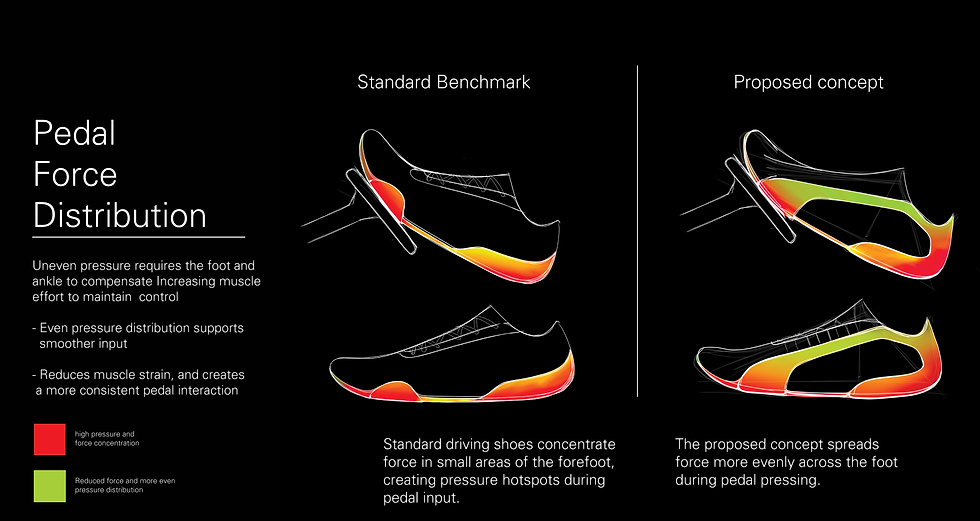

Pedal
Interaction
Studying foot rotation at the ankle and heel while maintaining stable pedal contact

SPEED CAT EVO

Orthographic
FIA material Regulations
Standard
FIA 8856 2018
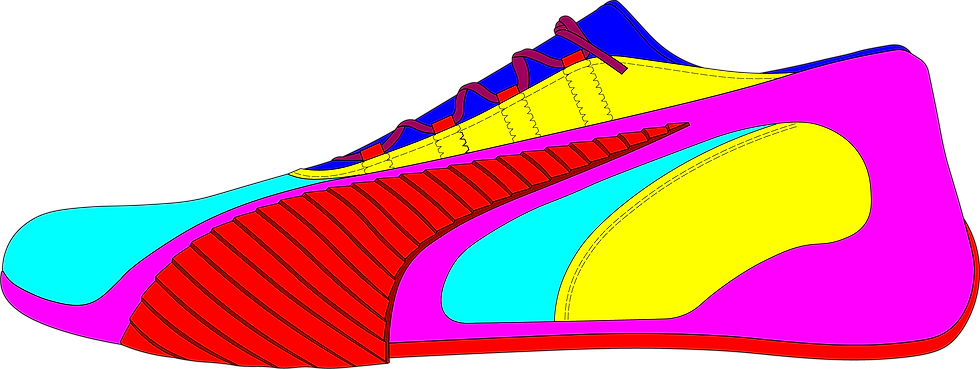
Mandatory regulation for sanctioned motorsport events
Protects the driver from fire, heat exposure, and material failure
Allows the shoe to be used both on the road and on track


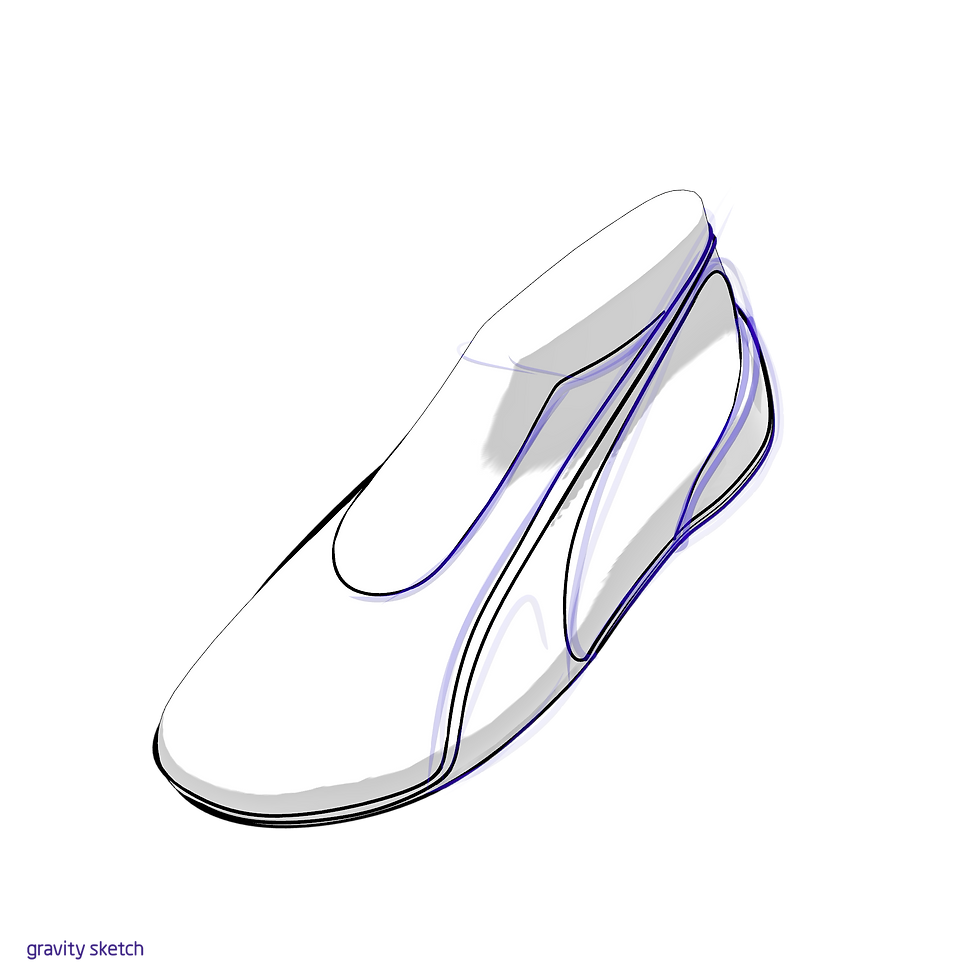
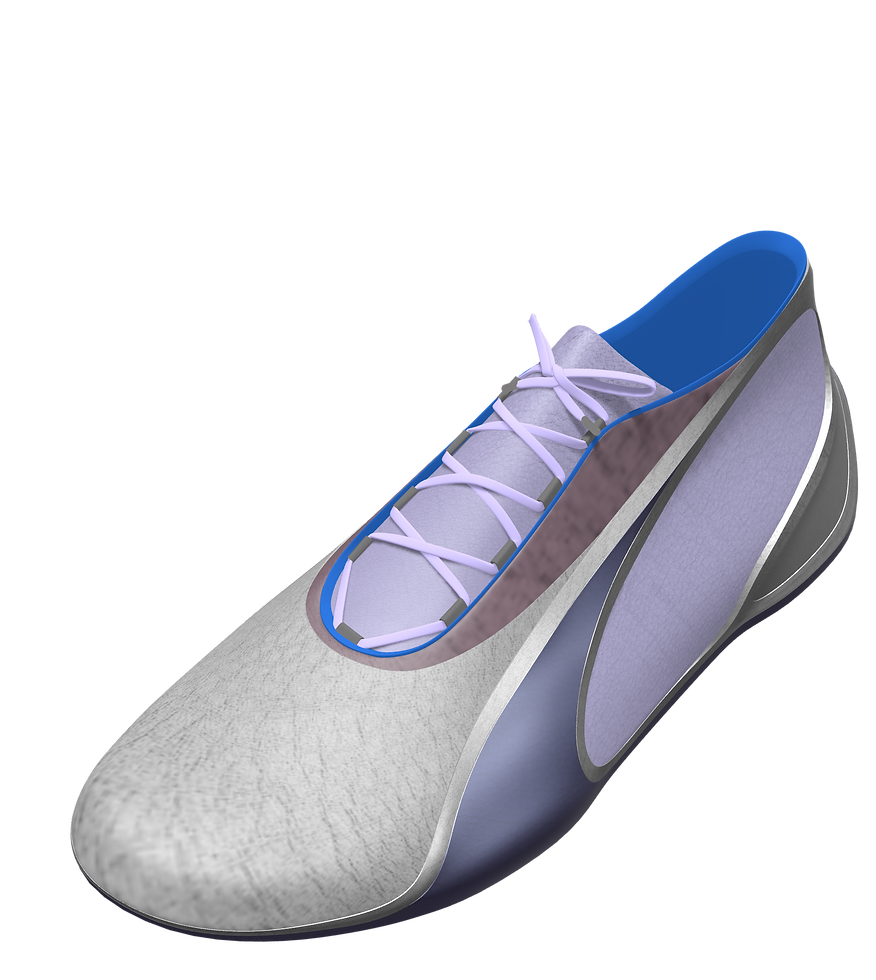
Modeling Process
1.

2.
3.

4.

5.

6.

7.
8.

1.
2.
3.
4.
5.
6.

7.
8.
Base form modeled in Gravity Sketch to define proportions, volume, and structure
Model imported into Substance for surface detailing, material definition, and refinement

Final Design
The molded unified system brings the foot, shoe, and machine into a single controlled interface.

Enhanced molding along the lateral toe increases grip and stability when the foot is loaded on its edge.


The rounded heel geometry works with a supported ankle structure to create stability without restricting motion.


SPEED CAT EVO
“Improving control through
a unified structural system”
Elevate
Calibrate
Harmony
bottom of page